
Power that doesn’tflinch.
Competition-grade sodium ion, LTO, NMC and LiFePO4 batteries for car audio. Up to 40,000 watts of constant support, actively balanced, and engineered to survive the kind of abuse that kills ordinary lithium.
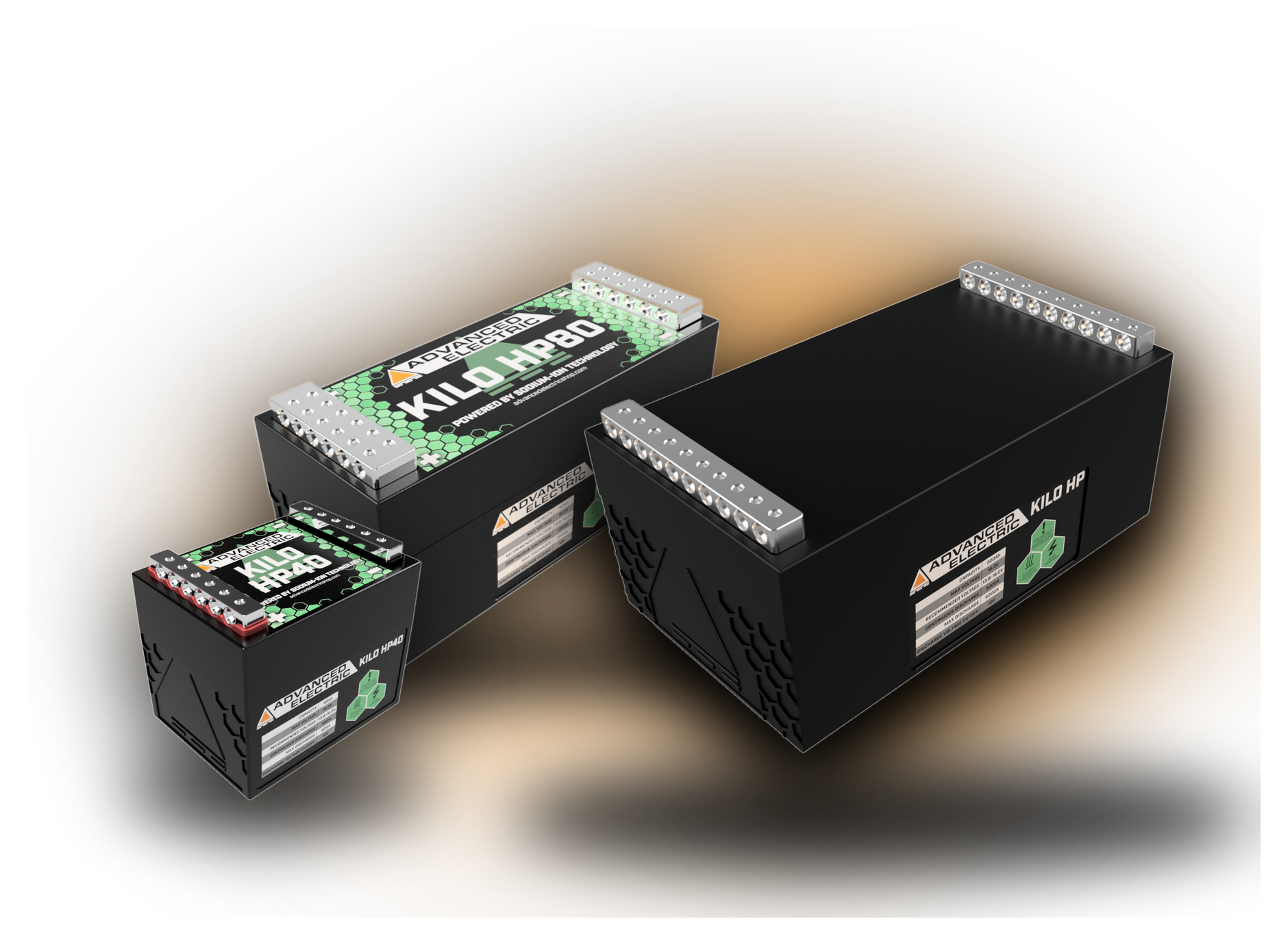
Sodium ion. Pick your output.
One chemistry, three sizes. Every KILO HP is actively balanced, runs a 13.8–15.5V charging window (the HP 200 takes up to 16V), and takes both lug and direct wire connections on the same terminal.
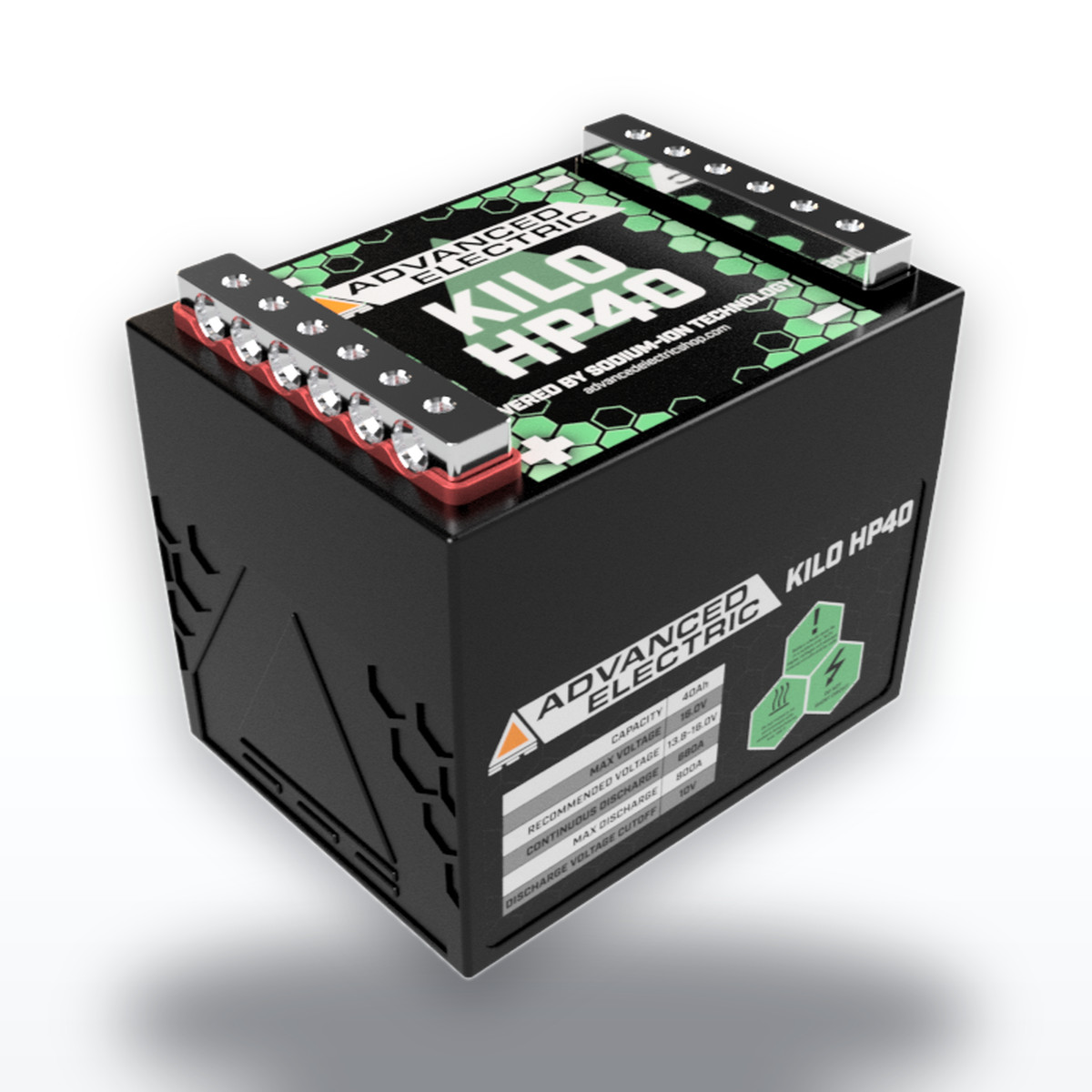
KILO HP40
- Constant output 7,000W
- Terminals 12 + / 12 −
- Max alt charge 375A
- Weight 22 lb
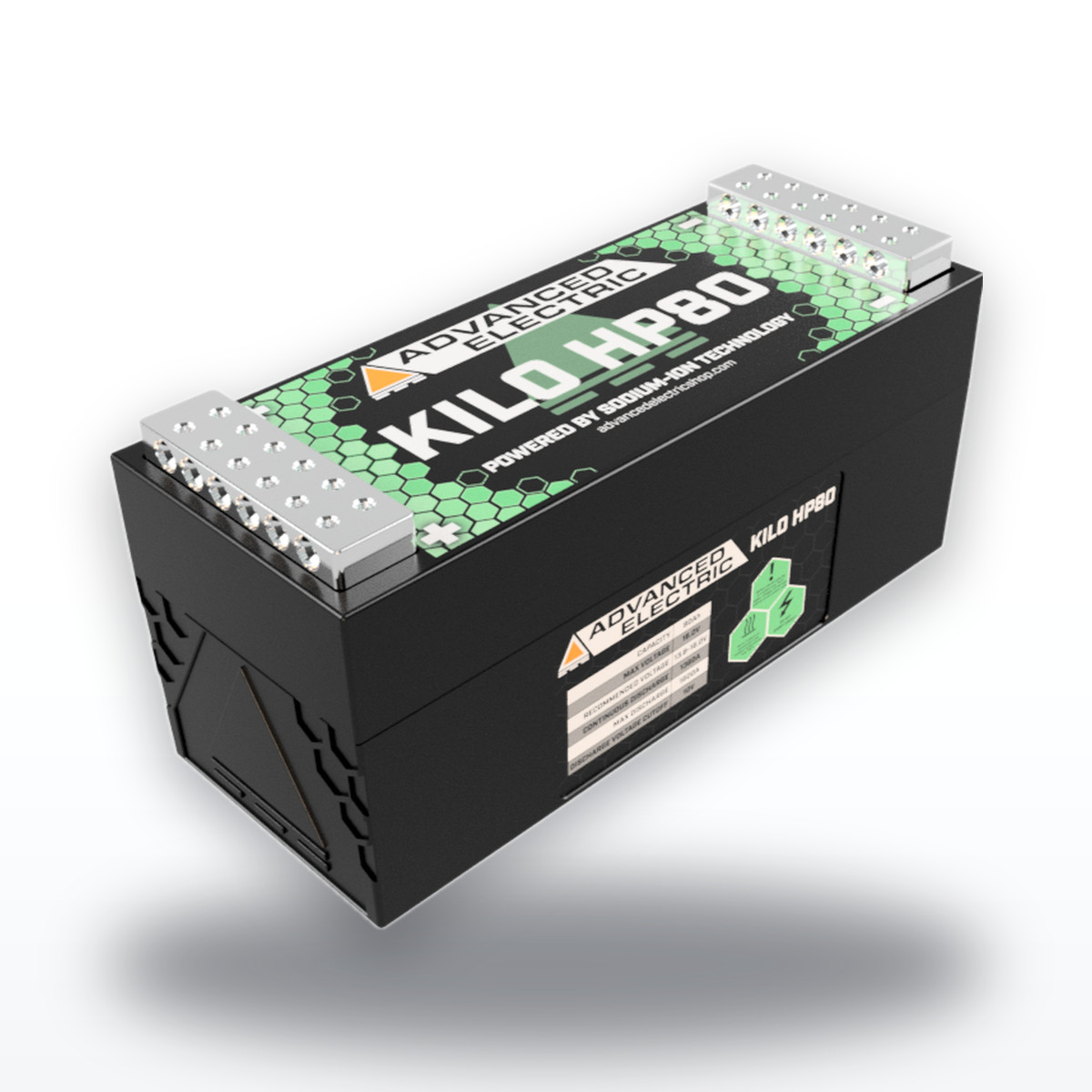
KILO HP80
- Constant output 14,000W
- Terminals 24 + / 24 −
- Max alt charge 750A
- Weight 44 lb
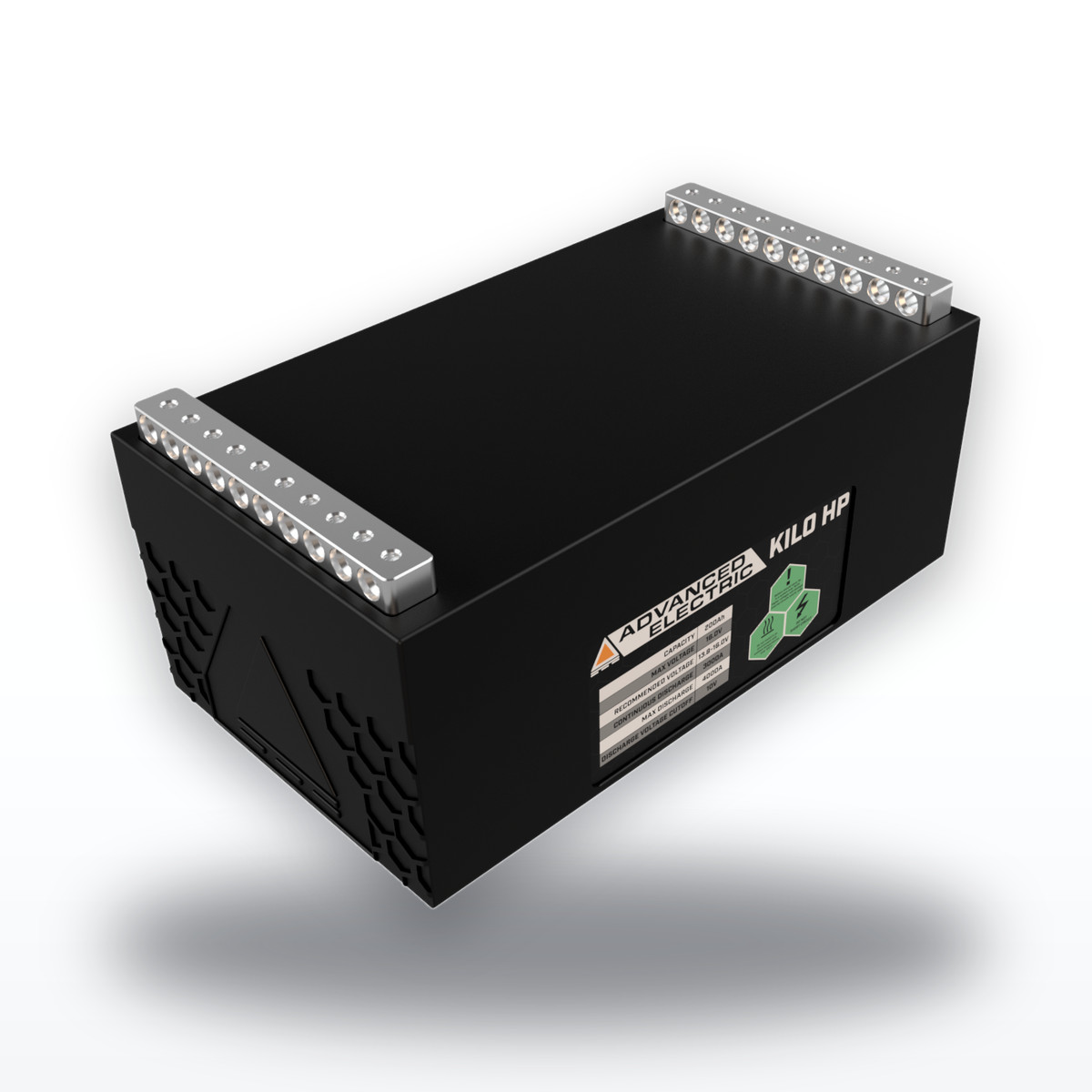
KILO HP 200
- Constant output 40,000W
- Terminals 20 + / 20 −
- Max alt charge 1200A
- Weight 75 lb
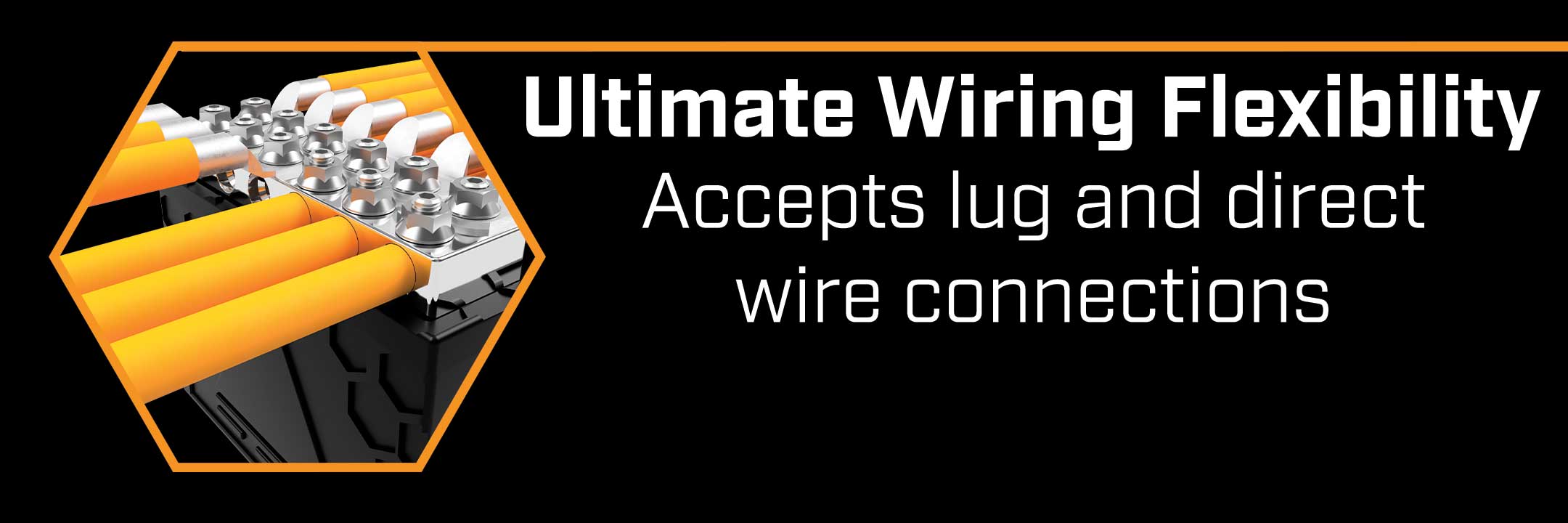
Wire it your way. Every terminal takes both.
Every Advanced Electric pack gives you lug mounting spots and direct wire inputs on the same terminal, at the same time. Land 2/0 in the set-screw inputs, bolt ring terminals to the lug spots, or do both on one pack — no adapters, no distribution blocks, no compromise on how the install is built.
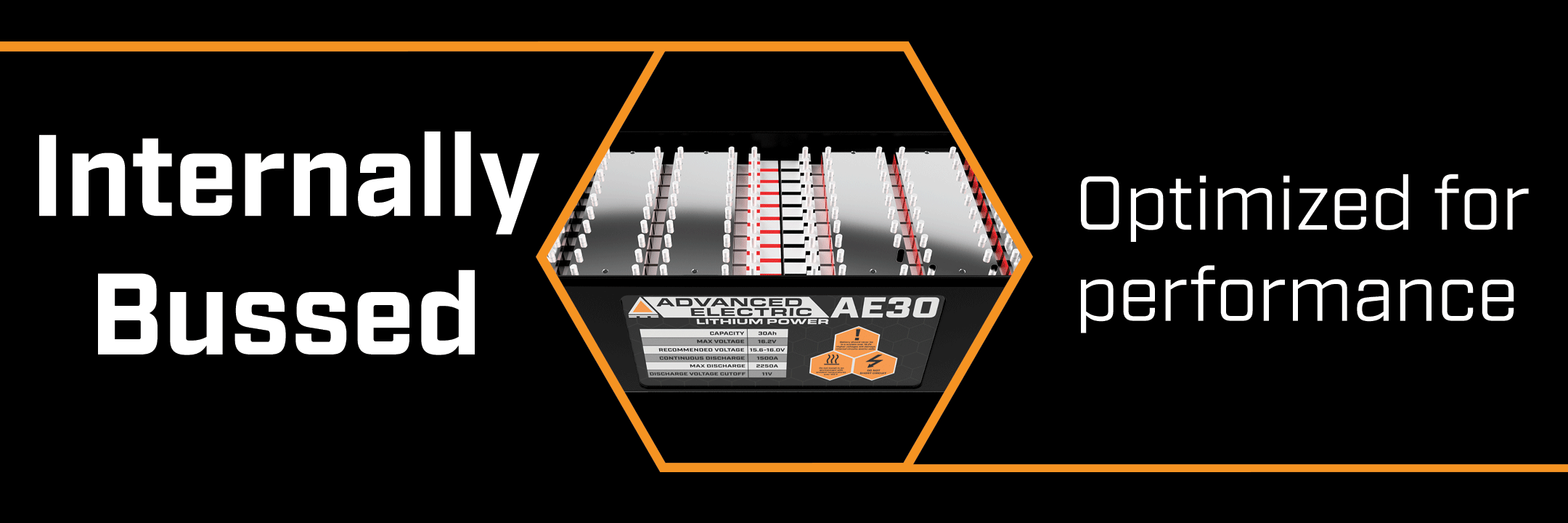
Underneath, the terminals ride on fully machined 6061 aluminum busbars that run the length of the pack, so every input sees the whole bank. And when one pack isn’t enough, our Battery Busbar Links join two AE30s or two AE45s terminal-to-terminal — no cable jumpers.
KILO HP80 24+ / 24−
KILO HP 200 20+ / 20−
AE15 6+ / 6− · 2/0
AE30 12+ / 12− · 2/0
AE45 18+ / 18− · 2/0
Safer chemistry. Harder duty cycle.
Sodium ion is a fundamentally more tolerant chemistry than lithium. It handles abuse better, it handles heat better, and it handles the deep repeated hammering an SPL system puts through a bank — the exact conditions that shorten the life of a conventional pack.
Every KILO HP runs active balancing, not passive bleed. Cells stay matched across the pack instead of drifting apart over a season, which is the difference between a pack that holds its rated output for years and one that quietly degrades.
17C Constant
20C burst. Rated at the terminal, not on a spec sheet.
14–140°F
Works in a trunk in August and a garage in January.
Active Balancing
Cells held in line across the whole pack, every cycle.
13.8–15.5V Window
Wide charging range, 15.5V max on the box — no exotic charger required. HP 200: up to 16V.
Dual Connection
Lug and direct wire on the same terminal, simultaneously.
Assembled in USA
Built, balanced and capacity-tested before it ships.
When 40,000 cycles matters more.
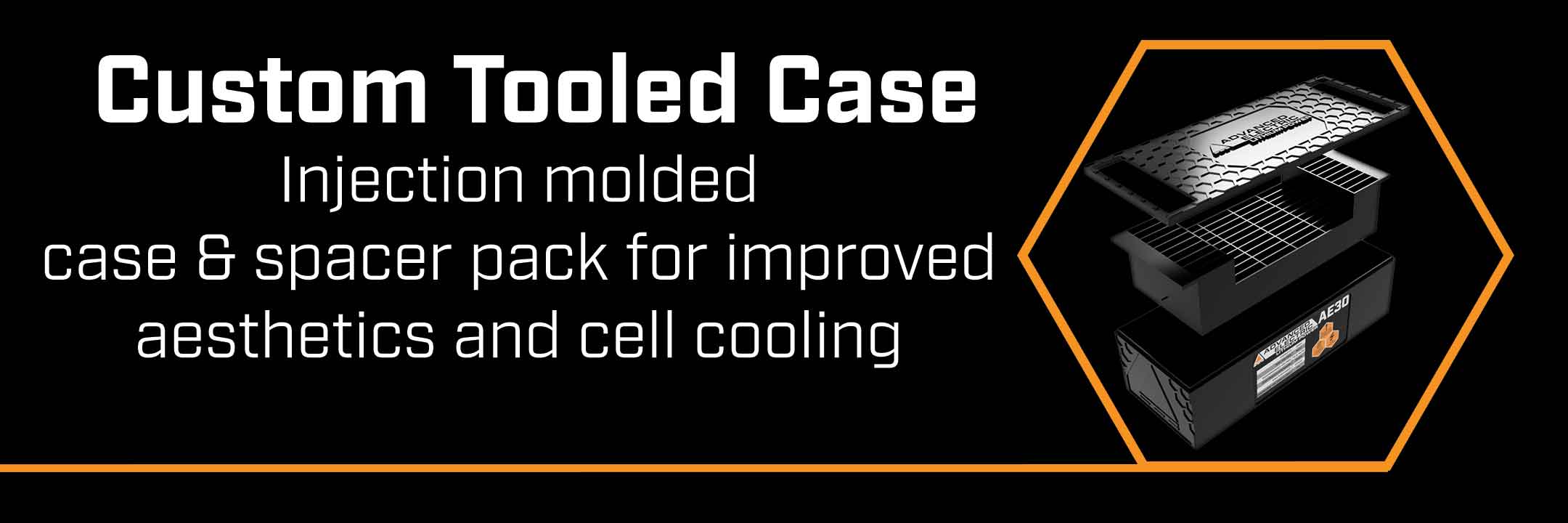
Lithium Titanium Oxide trades energy density for something most builds want more: brutal discharge rates and a service life measured in decades of cycles. Machined 6061 busbars, injection-moulded ABS case, built to order in about a week.
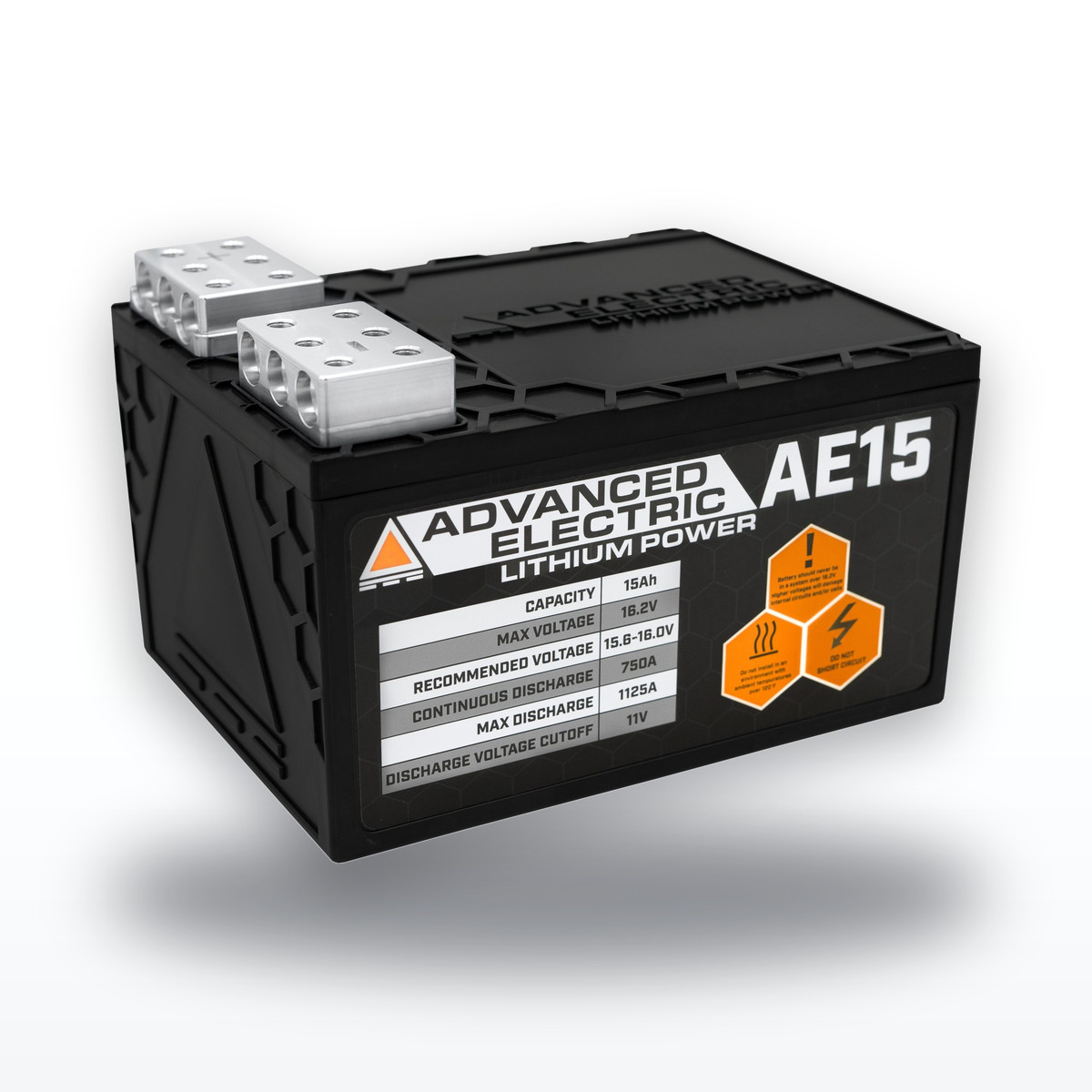
AE15
- Constant output 7,600W
- Burst 10,800W
- Discharge 50C / 75C
- Cycle life 40,000+
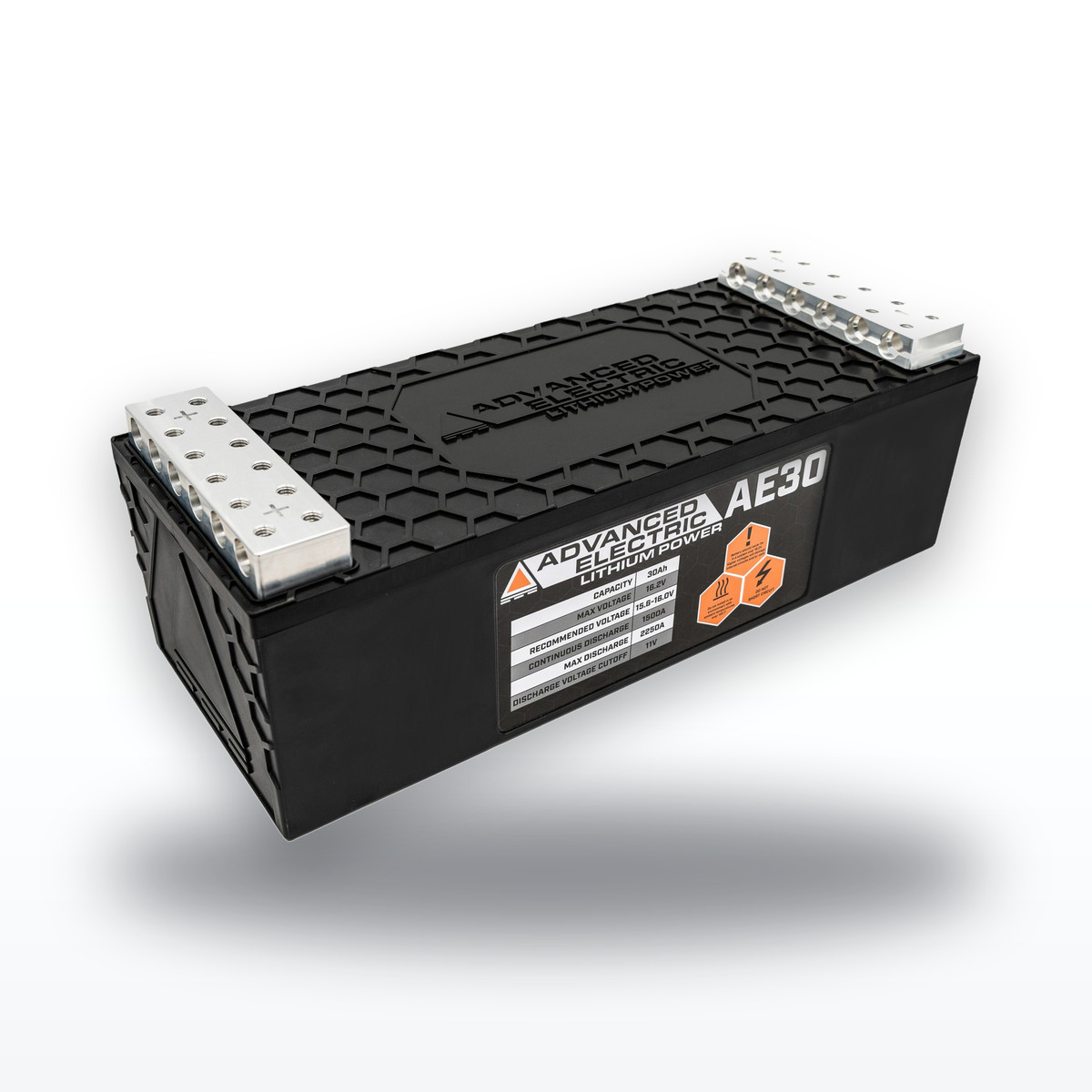
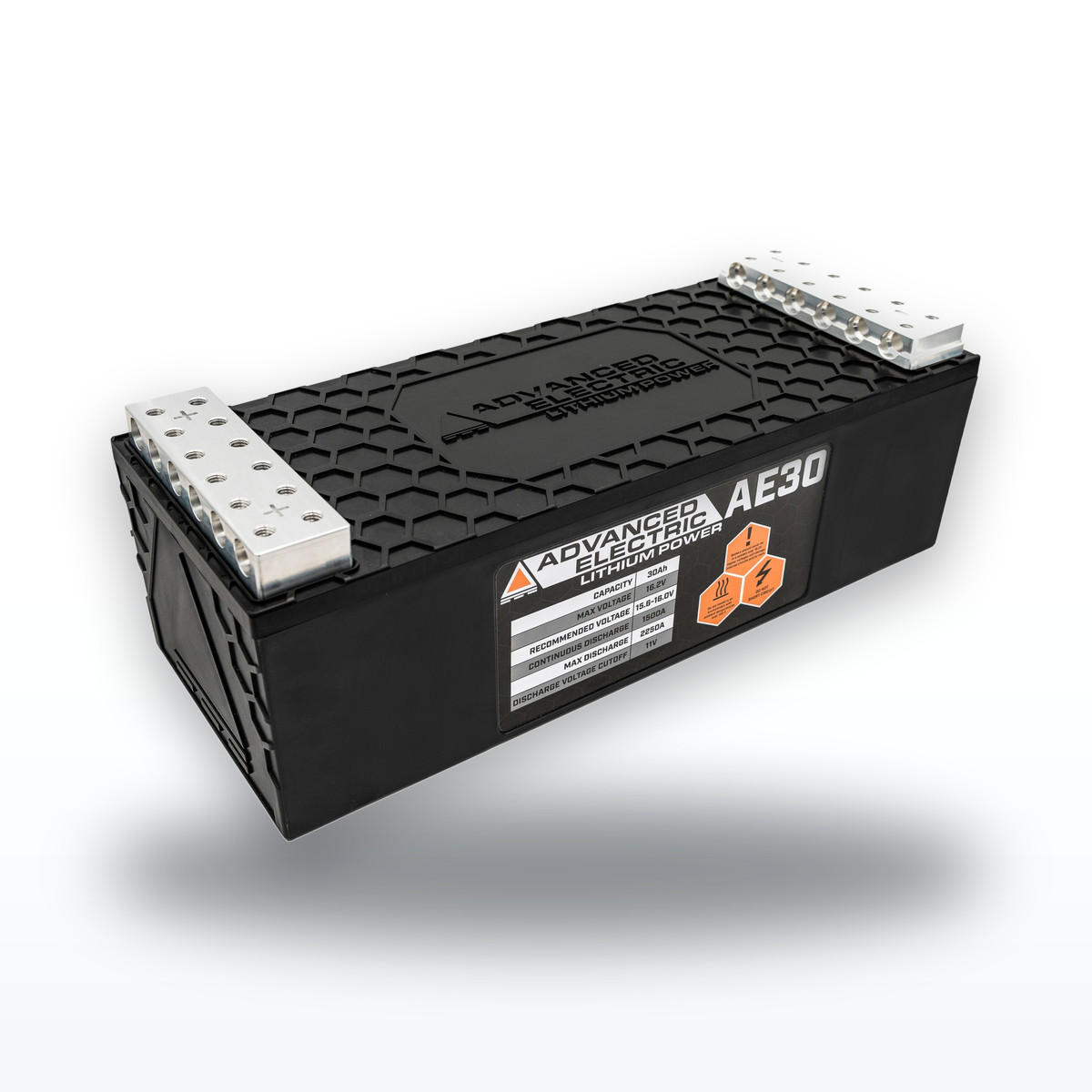
AE30
- Constant output 15,200W
- Burst 21,600W
- Terminals 12 + / 12 −
- Cycle life 40,000+
AE45
- Constant output 22,800W
- Burst 32,400W
- Discharge 50C / 75C
- Units being built 4
Know it before you buy it.
Charging, chemistry, sizing and diagnostics, written by the people who build the packs. We will happily talk you out of a purchase if that is the right answer.
Sodium vs LTO vs LiFePO4
Your charging voltage decides your chemistry, not your budget. The three options compared honestly, including when the cheap one is right.
Why voltage drops on the hit
Five checks in order before you buy another battery. Most of the time the pack is innocent and the ground strap is guilty.
How to size a battery bank
Amp-hours tell you how long, C-rate tells you how hard. The full calculation worked with real numbers, so you only buy once.
Questions we actually get
Charging windows, lead times, safety. Straight answers, no marketing.
Selling these in your shop?
Tiered dealer pricing, invoice terms and freight consolidation for shops moving volume. Tell us what you move and we’ll put you on the right tier.