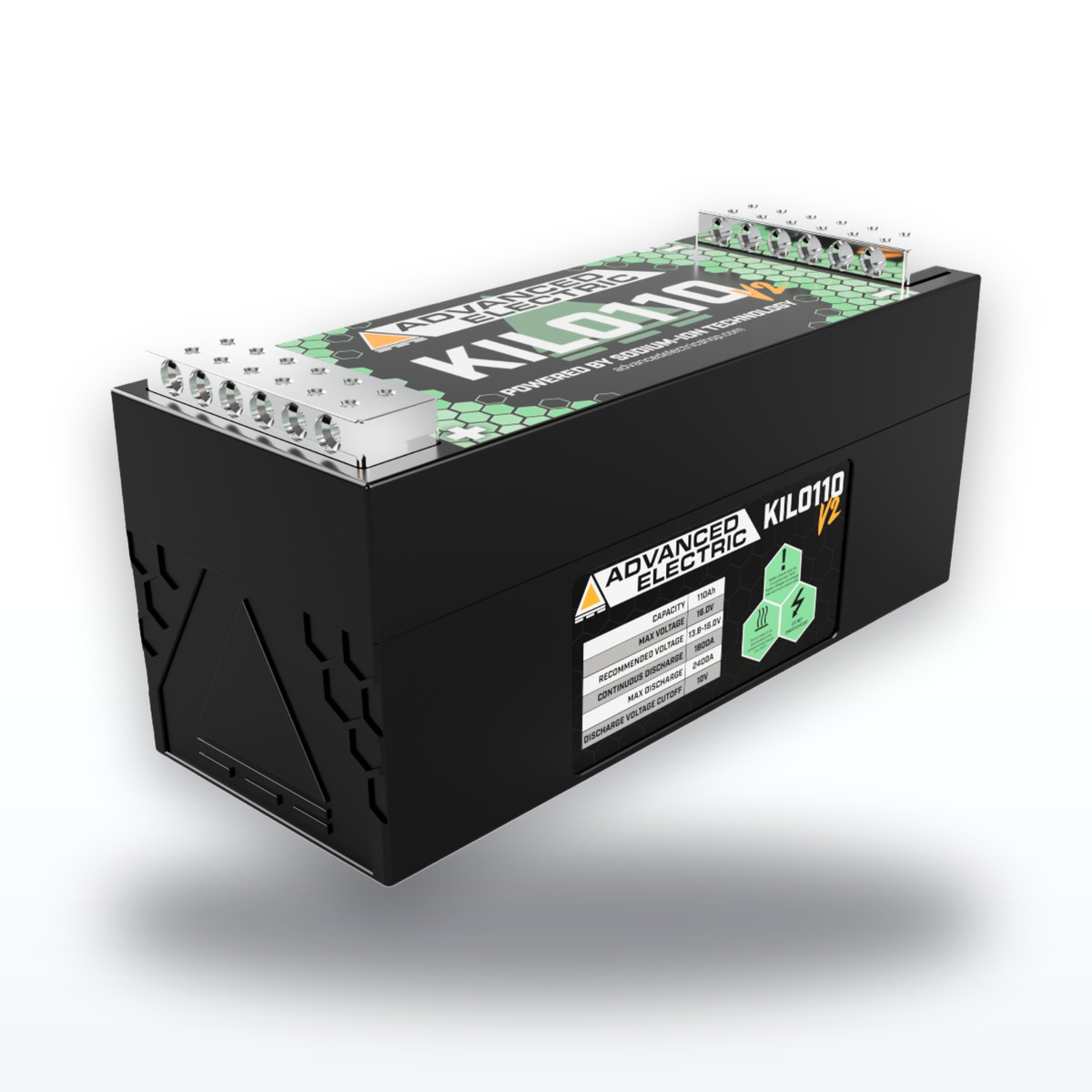
KILO110 V2 – 110ah Sodium Ion Battery

$1,499.99

❌ DISCONTINUED as of April 21, 2026 — not available to order.
Page kept for specs and support. KILO V3 preorders coming soon.

Discontinued · specs kept online

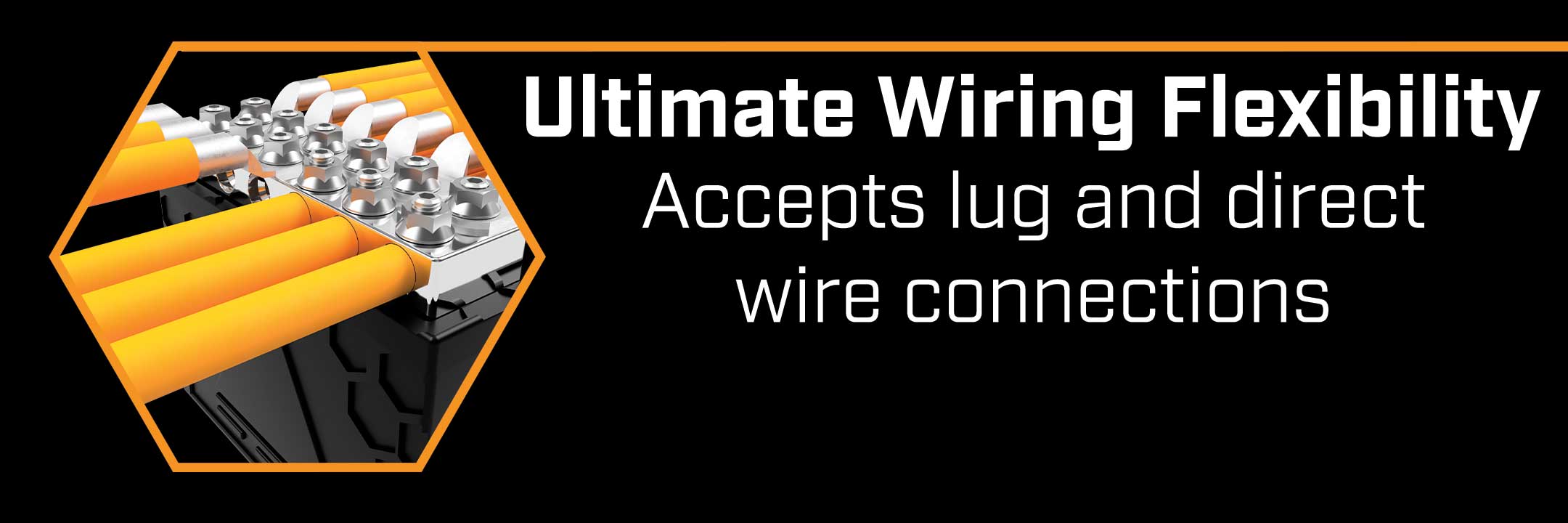
Ultimate wiring flexibility — accepts lug and direct wire connections
Inputs & wiring24+ / 24− inputs — lug & direct wire

Every terminal takes a lug and direct wire at the same time — no adapters, no distribution blocks.

Need help? Installation guideCharging & safetyWarrantyIs this the right pack?

AECharger
You’ll need a way to charge it AECharger · $70.00 Programmable CV/CC bench supply. Set the voltage and current to your pack’s charging window and top it off between sessions.
Add charger
SKU: Kilo110V2
Category:

Description

❌ DISCONTINUED as of April 21, 2026 — not available to order. Page kept for specs & support. KILO V3 preorders coming soon — watch this space.

Features

  • Extremely safe Sodium Ion chemistry
  • High discharge rate (15C constant, 20C burst)
  • Actively balanced
  • Wide charging range (13.8v-15.5v)
  • Temp range (14F-140F)
  • 24 POS / 24 NEG connection points, accepts both lug and direct wire connections at the same time
  • Max Alt Charging – 700A

Dimensions

Length 18.82″ · Width 7.53″ · Height 8.65″ · Weight 44 pounds

True Amplifier Power Ratings

15.5V Charging (Recommended)

  • 18,000W – Standalone (Constant)
  • 19,000W – With Stock Alt
  • 20,000W – With 200A Alt
  • 21,000W – With 300A Alt

14.8V Charging

  • 15,000W – Standalone (Constant)
  • 16,000W – With Stock Alt
  • 17,000W – With 200A Alt
  • 18,000W – With 300A Alt

14.4V Charging

  • 14,400W – Standalone (Constant)
  • 15,400W – With Stock Alt
  • 16,400W – With 200A Alt
  • 17,400W – With 300A Alt

14.0V Charging

  • 13,000W – Standalone (Constant)
  • 14,000W – With Stock Alt
  • 15,000W – With 200A Alt
  • 16,000W – With 300A Alt

Additional information

Weight 44 lbs
Dimensions 18.82 × 7.53 × 8.65 in

Specifications

Battery & capacity

Chemistry
Sodium ion
Capacity
110Ah
Output
18,000W constant at 15.5V

Discharge

Continuous
1,650A
Maximum
2,200A
Rate
15C constant, 20C burst
Discharge cutoff
10V

Charging

Charging window
13.8V – 15.5V
Hard limit
15.5V — never above
Alternator
700A

Physical & ownership

Weight
44 lbs.
Dimensions
18.82″ × 7.53″ × 8.65″
Balancing
Active balancer, no BMS cutoff
Warranty
1-year limited

Every pack arrives at roughly 30% state of charge. Charge it to your system voltage on the bench before installing — see the installation guide.

Running more than one pack?

Charging windows & pairing.

Every pack has a voltage window it lives in. This chart is zoomed to the KILO sodium so you can see at a glance what it shares a bank with — and where to set your charging system when it does.

Charging windows · zoomed to this packboth packs happy outside this pack’s window
13.5V14V14.5V15V15.5V16V
KILO sodiumthis pack
floor 13.8Vlimit 15.5V
AE LTO15.2V – 15.5V together
15.2V – 16.2V
AE LV LiFePO413.8V – 14.6V together
12.8V – 14.6V
THE DON NMC14.8V – 15.5V together
14.8V – 16.6V
  • Any other KILOPairs freely — same chemistry, same window. On a mixed KILO bank the ceiling is 15.5V (only the HP 200 takes 16V).
  • AE LTOPairs inside 15.2V – 15.5V · set 15.5V. Below 15.2V the AE LTO is undercharged; above 15.5V the KILO sodium is past its limit.
  • AE LV LiFePO4Pairs inside 13.8V – 14.6V · set 14.6V. Below 13.8V the KILO sodium is undercharged; above 14.6V the AE LV LiFePO4 is past its limit.
  • THE DON NMCPairs inside 14.8V – 15.5V · set 15.5V. Below 14.8V THE DON NMC is undercharged; above 15.5V the KILO sodium is past its limit.
How pairing works

Read the chart. Red is where this pack is outside its own window. Another chemistry can share the bank only where its bar crosses the clear area — the yellow band — and the charging system must sit inside it. Set it at the white marker, the top of the band: at the bottom of the band the pack with the higher floor is undercharged and never reaches rated output; above the top the pack with the lower ceiling is past its hard limit.

Sodium ion is the only chemistry that mixes. Lithium chemistries (LTO, LiFePO4, NMC) are never banked together — that is unsafe, and we do not support it.

On any bank: matched cable lengths so the packs share evenly, and bring every pack to a similar state of charge before connecting.